

If there is one ingredient that sits on the throne of skincare, it is the retinoid. It is widely considered the gold standard of anti-aging for a reason: it regulates skin cell turnover, boosts collagen production, unclogs pores, and helps fade hyperpigmentation.
However, the world of Vitamin A (the parent molecule of retinoids) can be confusing. Not all retinoids are created equal. If you’ve been too scared to start or aren't seeing the results you want, here is the deep dive you need to understand the "Royal Family" of skincare.
The Retinoid Family Tree
To understand how these products work, you have to look at how many "conversions" the molecule needs to undergo to become Retinoic Acid (the active form your skin can actually use). The fewer the steps, the stronger (and more irritating) the product.
-
Retinol Esters (The Babies): These are the gentlest forms (e.g., retinyl palmitate). and require three conversion steps to become active.
-
Who is it for? They’re great for super sensitive skin, but they are very weak and take a long time to show results.
-
Retinol (The Teenagers): The most common over-the-counter form. It takes two conversion steps to become active. It is effective, but it takes patience compared to prescription options.
-
Who is it for? Anyone looking to seriously tackle fine lines and texture who has graduated from the "baby" phase.
-
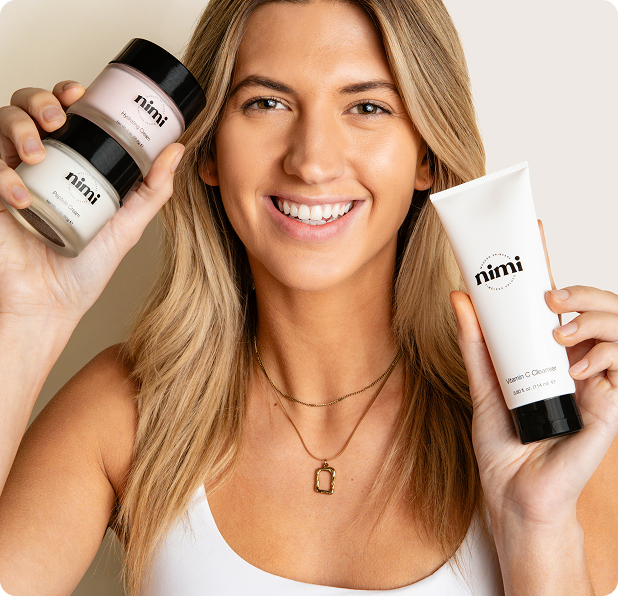
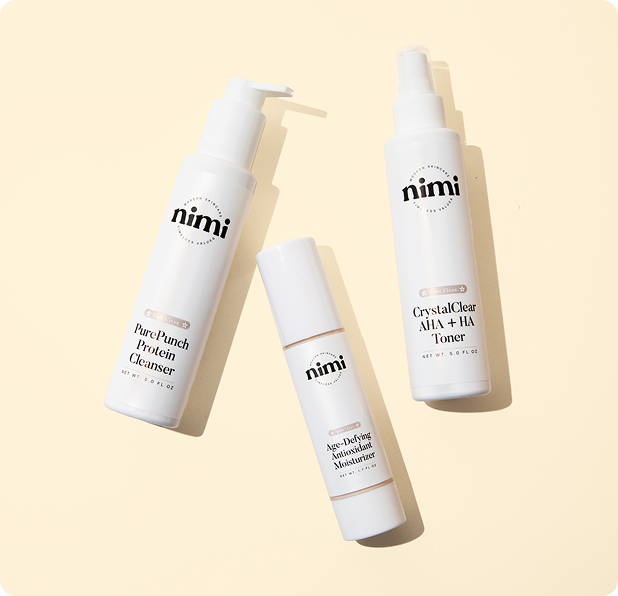
The Nimi Solution: We offer two ways to use this gold-standard ingredient, depending on your routine needs:
-
-
-
For Barrier Support & Hydration: Our Hydrating Night Cream. We paired Retinol with Hyaluronic Acid, Aloe, and Squalane to lock in moisture and strengthen the skin barrier. It allows you to wake up to visibly refreshed skin and treat fine lines without the dryness often associated with retinoids.
-
For Deep Targeted Treatment: Our Retinol Renewal Serum. This uses a liposomal delivery system to ensure the retinol penetrates deeply, targeting stubborn wrinkles effectively while maintaining hydration.
-
-
-
Retinaldehyde / Retinal (The University Students): A significant step up from standard retinol. It only requires one conversion step to become active, making it much more potent and faster-acting than retinol, but often yellow in color.
-
Retinoic Acid (The Queen): This is prescription-strength Tretinoin. It requires zero conversions; it is bio-available immediately upon application. It is the most effective for anti-aging and acne, but also the most irritating.
-
Adapalene (The Cool Cousin): Often known by the brand name Differin. It is a synthetic retinoid that is excellent for acne and is chemically more stable in sunlight than other forms.
The Golden Rule: Consistency > Intensity
If you follow only one rule, let it be this: Consistency over Intensity.
Using a super-strong prescription retinoid once every two weeks because it burns your face will give you worse results than using a weaker, over-the-counter retinol every single night. Irritation—which is essentially chronic inflammation—actually accelerates aging, which defeats the purpose entirely.
How to Start (The "Low and Slow" Method)
You cannot run a marathon without training, and you cannot apply strong retinoids every night as a beginner. To avoid "retinoid burn," follow this schedule:
-
Start Slow: Begin applying it just 2 nights a week for the first 2 weeks.
-
Ramp Up: If your skin tolerates it, increase to 3 nights a week for the next 3 weeks.
-
The Goal: Eventually, aim for nightly use. However, always listen to your skin. If you start to peel or sting, back off to the previous frequency.
How to Apply It Correctly
Application technique can make or break your experience. Here is the best routine to minimize side effects:
-
Cleanse: Wash your face and pat it completely dry. Never apply retinoids to damp skin; moisture allows the product to penetrate deeper and faster, leading to unnecessary irritation.
-
Protect Sensitive Areas: Apply a tiny bit of Vaseline or thick balm around your eyes, the corners of your nose, and the corners of your mouth. These areas tend to trap product and are prone to flaking.
-
Pea-Sized Amount: You only need a pea-sized amount for your entire face. Dot it on your forehead, cheeks, and chin, then connect the dots to spread it evenly.
-
Moisturize: Follow up with a good moisturizer to lock in hydration and support your skin barrier.
Common Myths Debunked
-
"Retinoids thin the skin": False. They thin the very top dead layer of skin (the stratum corneum), which gives you that glow, but they actually thicken the deeper layers of the skin (the dermis) by boosting collagen.
-
"You can't use it in the summer": False. You can and should, provided you are diligent with daily sunscreen use.
-
"It's only for wrinkles": False. It is the primary treatment for acne and is excellent for treating hyperpigmentation and uneven skin texture.
The Takeaway
Retinoids are a marathon, not a sprint. It typically takes 3 to 6 months to see real, visible changes in fine lines and texture. Be patient, protect your skin barrier, and remember: it’s better to go slow and steady than to rush the process and damage your skin!